Read + watch
+ observe
Arrive with evidence, an example and a provisional view.
 Economics of AI
What are the economic impacts of AI?
This course explores both the macroeconomic implications of AI—for example, whether it will lead to a jump in growth and prosperity, labor-market dislocations and joblessness, or changes in inflation—and its microeconomic and industry impacts, including which firms and industries will win or lose and whether AI will ultimately become a commodity. We also explore related technology trends that will interact with AI, such as autonomous vehicles, the electric tech stack and robotics, and may ultimately have some of the largest impacts.
THE COURSE QUESTION
We will ask not only what AI can do, but how quickly organizations change, who captures the value and which physical and political constraints shape the outcome.
THE INTELLECTUAL ARC
Lessons from History
Is AI really different—or are we repeating the early stages of every major technological revolution?
Value Creation ≠ Value Capture
AI could create trillions of dollars of value. Who actually gets to keep it?
Augmentation vs. Automation
Will AI replace workers—or make them valuable enough that we ultimately need more of them?
Will AI Deliver a Macro Payoff?
If AI is transforming firms, why is it so difficult to see in aggregate productivity statistics?
AI, the Electric Tech Stack, and Global Competition
Is the AI race really a race for models—or for chips, electricity, grids and physical infrastructure?
AI Across Industries
What happens when technological change creates concentrated losers faster than institutions can adapt?
HOW WE WORK
Arrive with evidence, an example and a provisional view.
Move from the headline to mechanisms, tradeoffs and incentives.
Record what changed—and what evidence would change you next.
YOUR FORECAST
Estimate AI’s effects on your own work and on the broader U.S. labor market. Responses are anonymous and may be compared with the class later in the course.
No names or identifying information are requested.
CLASS FORECAST · LIVE
Submit both forecasts to reveal the class results, or choose to view them without answering.
BACKGROUND TO CONSIDER · 2014
This NPR Planet Money treemap shows the structure of roughly 137 million U.S. jobs as it looked in 2014. Use it as historical context—not as a current labor-market snapshot.
View the original NPR article ↗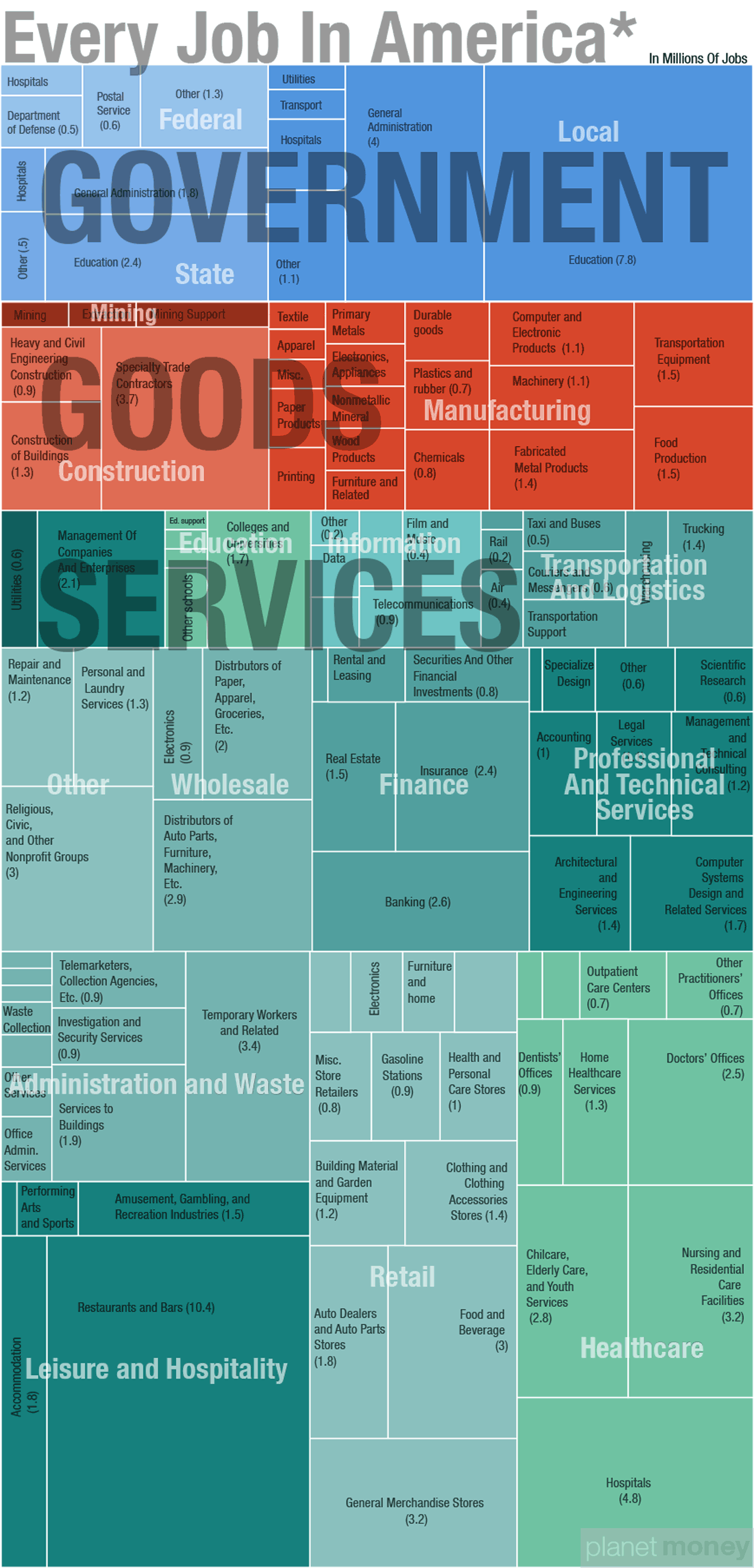
INTERACTIVE EXPLORATION · CURRENT BLS DATA
Interactive visualization by Andrej Karpathy, using U.S. Bureau of Labor Statistics Occupational Outlook Handbook data. AI-exposure scores are rough estimates for exploration, not predictions that a job will disappear. If the interactive does not load here, use the link above to open the original site.